
spill-proof snack bowl
Design for the extremes. These bowls were made for toddlers, but an inner bowl that swivels to stay level helps on any unsteady surface.
design is collaborative
accessible solutions for people with disabilities
Inspired by my Opa’s post-stroke challenges, I partnered with Daily Living Labs to design a stabilizing bed tray that lets people eat with dignity and independence while bedbound.

A mockup of the prototype gimbal from this case study.
Daily Living Labs (DLL) is a nonprofit focused on activities of daily living (ADLs). It connects people with accessibility needs to the designers, engineers, and makers who can help.
It works in two parts. People post what they need. If it already exists, an AI chatbot sources it; if it doesn’t, DLL pairs them with designers and engineers to build it. I was part of the product design team.
Product Design Team
My name is Faatimah Gamble, and I’ve been developing a stabilizing bed tray. I grew up with an uncle who had cerebral palsy, and I currently have a grandfather who has suffered from multiple strokes, which has left him partially bedbound. These experiences have made my time working with Daily Living Labs much more impactful. I feel like I’m working for real people whose needs I understand from a personal point of view. It’s like I’m not just working toward a grade. I’m working toward turning an experience that’s been difficult for my loved ones into a much better situation.
Finding a focus meant moving from broad ecosystem research to a specific, at-home observation.
To understand where accessible design falls short, I interviewed Zebreda, a YouTube creator who uses a power wheelchair. She builds her own solutions because no one else does. But she can’t build everything, and that gap is where DLL steps in.
We ran empathy immersion workshops where volunteers simulated physical limitations to evaluate early concepts against the seven core Activities of Daily Living (ADLs).
Workshop Facilitators
While the workshop data gave me a broad map, my actual design direction came from my own living room. My Opa was staying with my family after a series of strokes, and I watched him struggle daily just to keep his plate steady while eating in bed.
I started with a competitive analysis of what already existed and where it fell short. Three products shaped the design.
Design for the extremes. These bowls were made for toddlers, but an inner bowl that swivels to stay level helps on any unsteady surface.
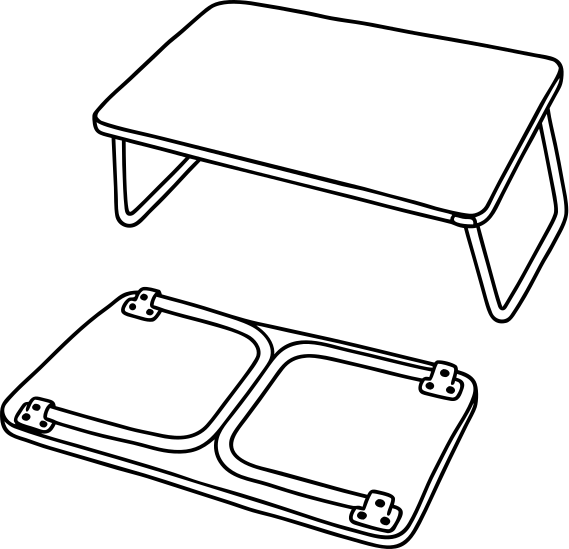
My Opa ate in bed, propping his plate on whatever was in reach. Bed trays aren’t new, but I wanted to make it work specifically for an unpredictable surface.

A sloped bowl can be used for one-handed eating, but nothing holds it steady as you push against it.
Built with Prusa 3D printing, 3D pen work, and hand sculpting, so I could iterate fast.
I put the prototype in front of real users and made refinements around their feedback.
Rapid Prototyping
iterations tested with classmates, friends, and family who don’t struggle with the feeding ADL, just to get the form right before it went in front of the people it was really for.
User Testing
adult wheelchair users of varying mobility levels tested the prototype at the Power to Move adaptive gym.
The biggest ask was a way to attach the tray right to the wheelchair, and every round of feedback drove a change:
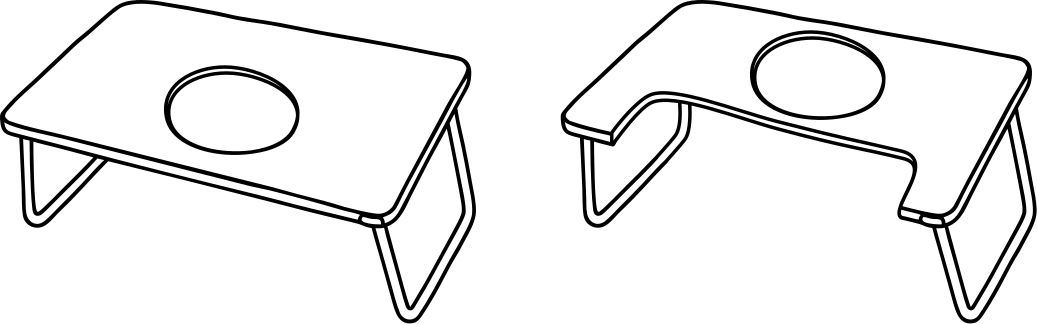
A body cutout
A contoured opening in the tray sits around the torso for a more natural eating position.
They said, “I want to sit closer to the tray, especially in a wheelchair.”
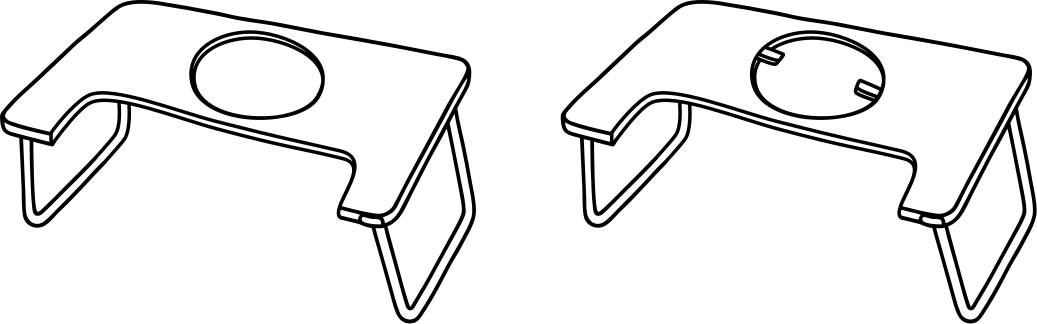
A gimbal lock
It turns the rotating mount into a stable, flat surface on demand.
They said, “I need it to stay put and feel secure when I’m not moving.”
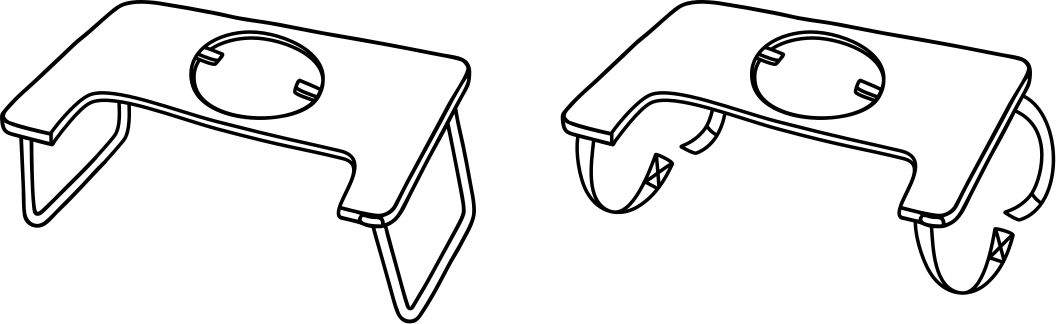
Two configurations
Fold-out legs for a bed or flat surface, and Velcro wheelchair straps for on-the-go.
They said, “I want to attach it right to my armrests.”
After testing and feedback from seven real users, the design finally became something people said they’d actually use.
The tray didn’t stop at a final prototype. It was featured at the Abilities Expo, where the disability community comes together to discover new assistive technology.